
6. Really Listen: A simple—but difficult—connection skill.
Last week’s newsletter was about asking good questions. But a good question only goes so far. What makes a conversation great—and builds connection—is what happens after the question: how well we listen.
Listening is one of the simplest connection skills—and one of the hardest to practice—because our attention is constantly being hijacked. (Seriously, when was the last time you felt truly listened to?)
Attention has become a rare and precious commodity, so when you give it to someone else—by deeply listening—they’ll appreciate you for.
Here’s what you’re up against and why it matters.
What?
In a study by Microsoft, participants were only able to focus on a task for 8 seconds before switching their attention to another activity.
And then there’s “phubbing”—a phone snub—when someone scrolls or glances at their phone while you’re mid-sentence). Research shows it triggers feelings of rejection and erodes trust, especially when it happens repeatedly.
No surprises there. But another study found that the mere presence of a phone on the table—even face down, on silent—reduced people’s feelings of closeness and connection, and how they rated the quality of the conversation, especially when the topic mattered to them.
In other words: Actual distraction undermines connection. But even the possibility of distraction makes people less likely to go deeper—which has real consequences for collaboration, creativity, and belonging.
So What?
We’ve all had the experience of realizing—mid-conversation—that the person we’re talking to isn’t fully with us. Maybe their phone buzzes. Maybe their eyes glaze over. Maybe their response is out of sync with what you just shared. It happens ALL. THE. TIME.
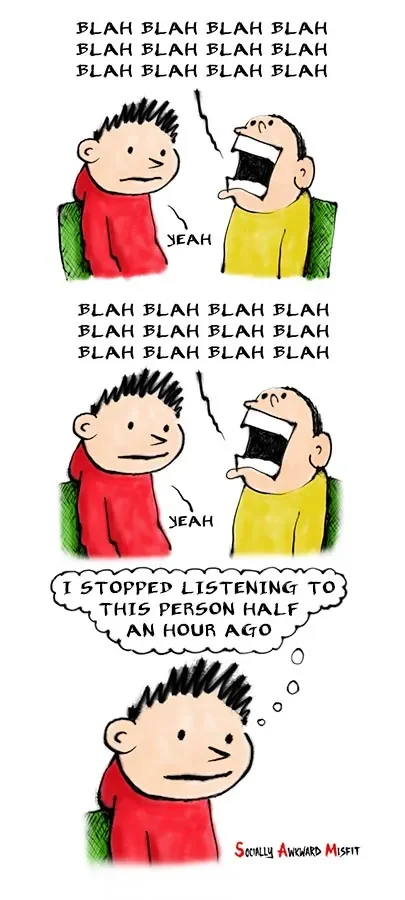
We’ve all been the distracted one too. Between notifications, work pressures, and our mental noise—giving someone our undivided attention takes real effort. That’s exactly why it means so much when you do. It makes the other person feel seen and heard. It creates a foundation of trust and empathy to build strong relationships from.
Now What? Connection Practice: Really listen.
To strengthen your listening muscle, pick 2-3 conversations—at work or home—and practice listening with intention. Here are the specifics to focus on:
To Connect:
Be present. Give the other person your undivided attention. Put away your phone, and set aside what’s running through your head, and resist the urge to plan your response while they’re still talking.
Listen to understand. Try to see things from their perspective. Reflect back what you heard before offering your reaction or ideas.
Express empathy. Sometimes people just want to be heard and understood. Ask yourself if this is an emotional conversation (in which case, empathize), or a practical/logistical one (in which case, offer suggestions). When in doubt, ask, “do you want me to just listen, or help you problem-solve?”
To Facilitate Connection. If you’re leading a meeting, group, or class:
Ask everyone to put their phones away, to minimize distractions.
Model what really listening looks like. After someone speaks, pause and reflect back what you heard before moving on. This signals that their contribution matters.
One of the things I love about the ProjectConnect program is that it gives participants a weekly chance to practice really listening and experience being heard—which reliably builds connection.
What about you? Please share your responses in the comments—I love hearing from you!
How does it feel when someone truly listens to you vs. when they’re distracted?
When was the last time you felt truly listened to? Who was the listener?
