
26. Give a Great Compliment
Giving (and receiving) compliments can make us feel a little squirmy. Here's why they matter more than you might think.
What? Connection Factoid
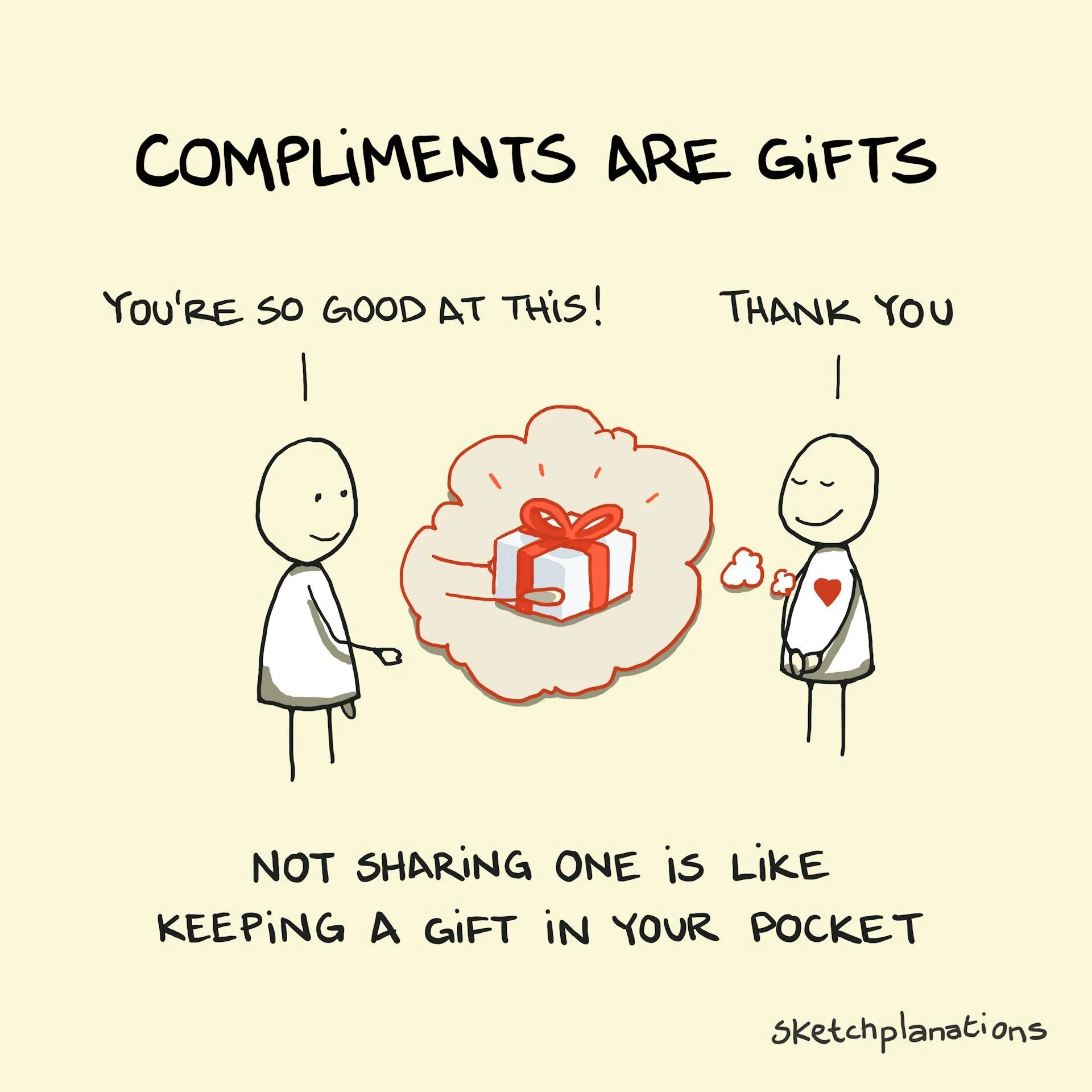
A study cited in the Harvard Business Review found that people hesitate to give compliments because they underestimate the impact and overestimate the awkwardness.
Participants were asked to predict how another person would feel after receiving a compliment. They usually guessed “meh” or “awkward and uncomfortable.”
The same participants were then asked to give a compliment to another person. When researchers assessed how the recipients actually felt:
“We consistently found that people underestimate how good their compliment would make the recipient feel. Compliment-givers tend to believe the other person won’t enjoy their interaction as much as they actually do; in fact, they often believe that their exchange will probably make the person a little uncomfortable. Yet, consistently, receiving a compliment brightens people’s day much more than anticipated, leaving them feeling better, and less uncomfortable, than givers expect.”
Another experiment found that people are more willing to give compliments when they focus on the warmth, sincerity, and friendliness of their compliment—rather than perfect delivery.
So What?
When you give someone a great compliment, you give them a happiness boost—which in turn makes you feel good. It also strengthens the relationships, because we tend to like people who see us in a positive light.
Compliments help people feel seen—and feeling seen is an important building block of employee connection and belonging.
So, what sets a great compliment apart from a generic one? Sure, everyone likes to hear that they have a great haircut and fantastic shoes, but if you want your compliment to make a more lasting impact, try stretching beyond appearances and generalities (like “great job”). Get specific about what you like, admire, or respect about the recipient’s personal qualities or skills.
There are a handful of compliments that I still remember years later. One is from a colleague, who commented that I was a highly skilled facilitator. This was particularly meaningful at the time because the committee I was chairing felt like herding cats, and I was feeling insecure in the role. Her compliment gave me a much-needed boost of confidence.

Activity by Rainbow Sky Creations
Now What? Connection Practice: Give great compliments
To practice giving great compliments, think about what your compliment recipient might like to hear. Get specific about what you like, admire, or respect about their personal qualities or skills.
What sets them apart or makes them stand out? What are their unique contributions?
What do you most appreciate or enjoy about this person?
Is there an area they’ve devoted a lot of effort to and may crave recognition for?
For leaders and connection-builders:
Pay attention to progress: when a team or group member improves a skill, moves forward on a project, or makes progress on a goal, make a point of acknowledging it.
Start an appreciation practice. Build in a few minutes at the end of a meeting, group, or program for shout-outs. Get our Appreciation Stationery and turn compliment-giving into an event or regular practice.
Practice using “compliment jars” for members of your group/team/class. Make a jar with a person’s name on it, have pieces of paper and a pen handy for people to write compliments throughout the week and add to the jar. If you’re worried about unequal distribution of compliments (which may make people feel less connected) you can draw names, or try having a group/team/class jar rather than individual jars.
What about you? Please share your responses in the comments—I love hearing from you!
Have you received any compliments that stuck with you—even months or years later?
What do you think are the most important ingredients of a great compliment?